Building a Penguin with Simple Clay Shapes
Today’s classroom-friendly project focuses on a penguin—one of the most familiar animals connected to winter themes, polar regions, and even Christmas activities.
For this project, we will create a baby emperor penguin.
Its rounded body and simple proportions make it an ideal subject for structured 3D learning.
1. Start with Context (Engage Before Building)
Before starting the activity, introduce the real-world context of the penguin.

Before starting the activity, introduce the real-world context of the penguin.
where penguins live
how they survive in cold environments
how they stay together in groups
Using images—such as a penguin family—helps students stay engaged and connect with the subject.
This step shifts the activity from simply “making” to understanding before building.
2. Observe the Real Subject
We begin by looking at a real penguin—specifically a baby emperor penguin.
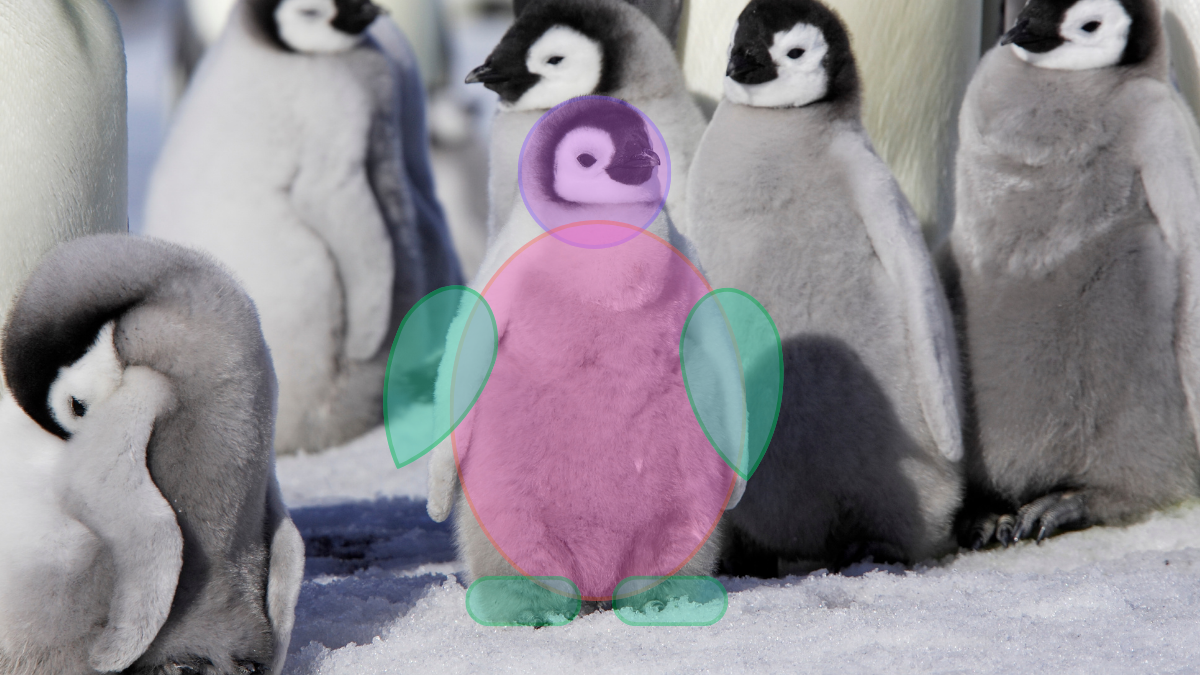
Rather than stopping at observation, we encourage students to interpret each part using simple shapes in their own way.
Instead of assigning fixed forms, they look at each part and ask:
What shape does this remind me of?
How can I simplify this form?
Each student may see and translate the penguin differently—and that’s the goal.
There is no single correct answer—only clearer and more thoughtful interpretations.
Through this process, the penguin is no longer just something to copy, but something to analyze and reconstruct.
This step shifts thinking from “a penguin” to a structure they actively build using shapes.
3. Plan and Build with Clay
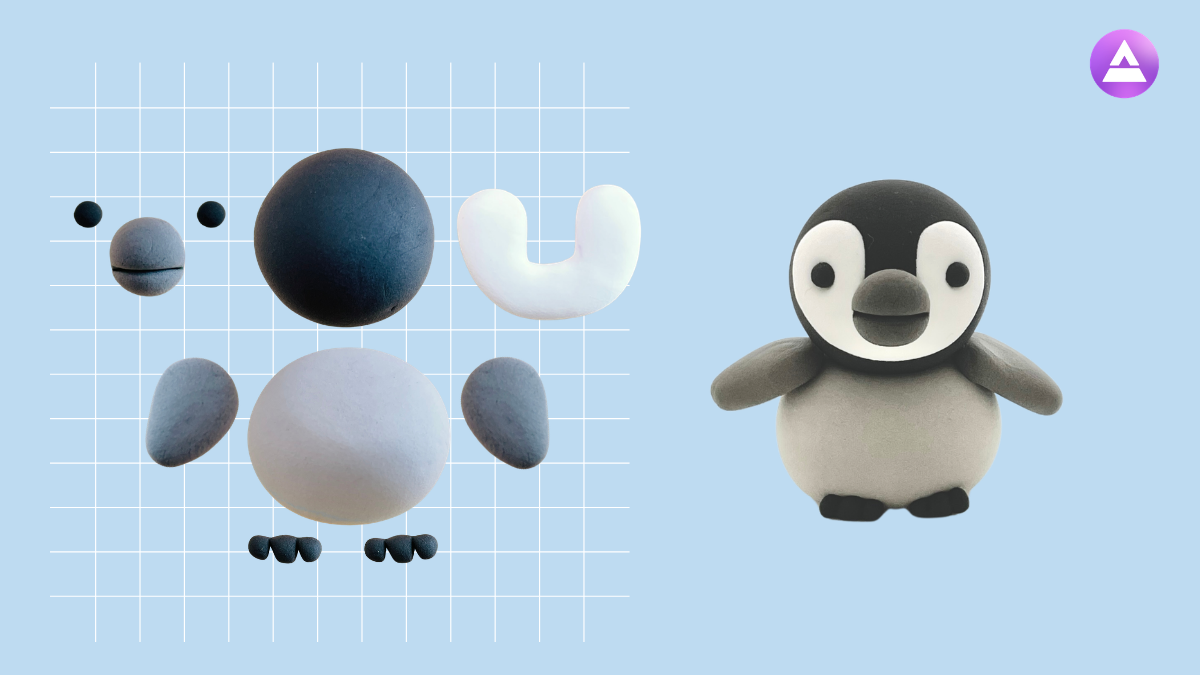
Now we translate those shapes into clay.
Plan what shapes are needed
Build each part step by step
Assemble from larger forms to smaller details
This sequence helps learners understand how complex forms are constructed from simple building shapes.
Why This Process Matters
Through this method, children learn more than just how to make a clay figure.
They practice:
breaking down visual information into parts
mentally simulating 3D structures
reconstructing objects through spatial reasoning
Over time, this strengthens their ability to:
imagine forms in 3D
mentally rotate objects
understand how parts connect in space
This is closely connected to spatial thinking, a foundational skill for STEM learning.
Classroom Use
If guiding this process step by step feels challenging, a classroom-ready video is available.
Teachers can use it directly in lessons so students can follow along visually while building their own clay penguin.
👉 Watch the full step-by-step penguin video here
This is not just a craft activity.
It is a structured way of thinking—
learning how to turn real-world observations into 3D creations using simple shapes.
👉 You can also explore simplified versions of this project on our Instagram.